Thermal Energy Storage Tanks 50–500 m³ — EN Certified
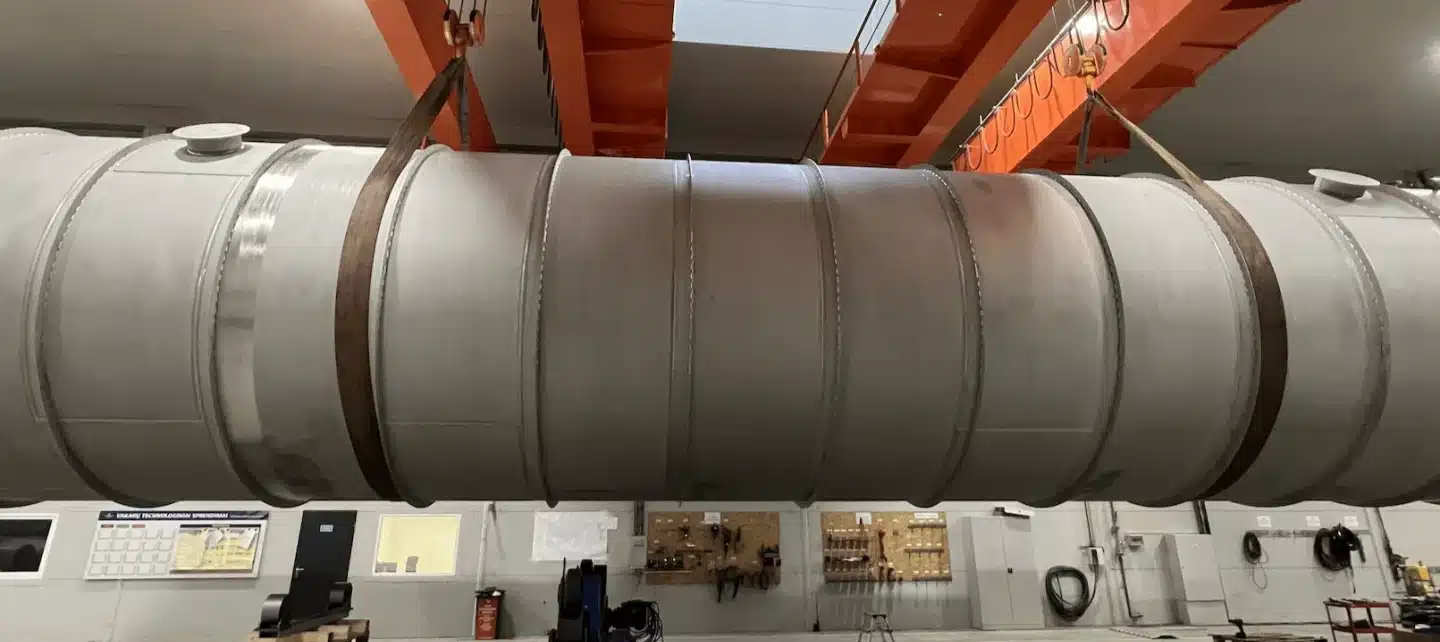
WTS Atmospheric Thermal Energy Storage Tanks are prefabricated, factory-built stainless steel welded tanks designed and constructed in accordance with EN 14015 (Specification for Vertical, Cylindrical, Flat-Bottomed, Above-Ground Welded Steel Tanks). They are the optimal solution wherever thermal storage is required as part of a high-performance, cost-optimized heating system — the standard configuration for modern industrial and commercial heat pump installations, district heating substations, and demand-response energy systems. This is particularly true for heat pump–based heating systems, which typically operate with thermal media temperatures of no more than 65 °C
WTS atmospheric thermal energy storage tanks are:
- Non‑pressurised, factory-built, vertical, cylindrical, above-ground, thermally insulated stainless steel welded tanks.
- Designed and constructed to EN 14015 for atmospheric hot water storage service.
- Thermally insulated to EN 17956:2024 Class A — the highest energy efficiency grade under current EU regulation.
- Designed for optimal thermal stratification, maximising stored energy availability and heat source COP (Coefficient of Performance).
- Structurally designed to resist wind and seismic actions in accordance with EN 1991 (Eurocode 1) for the most demanding EU site classification conditions as standard.
- Supplied with Declaration of Performance (DoP) per CPR 305/2011, EN 10204:2004 Type 3.1 material certification, and full NDT records.
- Pre-fitted with temperature sensor connection flange as standard.
- Designed for a maximum heating medium temperature of +95 °C at atmospheric operating conditions. For operating pressures above 0.5 bar, please refer to our Pressurised Heating Buffer Tanks.
- Delivered with a complete engineering package: 3D model (IFC format), P&ID, general arrangement drawing, nozzle schedule, and datasheet.
- Available in austenitic and duplex stainless steel grades; duplex grades are recommended for heating media with elevated chloride concentrations or aggressive water chemistry.
- Configurable with application-specific nozzle layouts, insulation specifications, and extended scope of supply.
Offered Thermal Energy Storage Tanks Volumes
Vertical Above-Ground Thermal Energy Storage Tanks
| Tank Model | Nominal Capacity, m³ | Internal Diameter, mm | Approx. Overall Height (without insulation), mm | Approx. Usable thermal energy for typical ΔT = 30 K |
|---|---|---|---|---|
| TES-050-ATM-H | 50 | 2450 | 11010 | 1.56 MWh |
| TES-080-ATM-H | 80 | 3050 | 11410 | 2.51 MWh |
| TES-100-ATM-H | 100 | 3050 | 14170 | 3.13 MWh |
| TES-150-ATM-H | 150 | 3400 | 17050 | 4.7 MWh |
| TES-200-ATM-H | 200 | 3750 | 18680 | 6.27 MWh |
| TES-300-ATM-H | 300 | 4600 | 18700 | 9.4 MWh |
| TES-400-ATM-H | 400 | 5260 | 19130 | 12.54 MWh |
| TES-500-ATM-H | 500 | 5260 | 23750 | 15.67 MWh |
** Operating temperature differential ΔT = Tsupply – Treturn.
Delivery Options
Depending on the specific requirements of the customer’s project, Thermal Energy Storage Tanks can be supplied in a wide range of configurations and technical arrangements.
Factors such as storage capacity, hydraulic integration, design heating network temperature regime, installation site conditions, and decarbonization strategy influence the final design.
To ensure optimal performance, safety, and compatibility with district heating systems, renewable energy sources, and industrial heating applications, both standard and optional equipment can be selected.
The table below outlines the available delivery options, highlighting standard components and configurable items that can be adapted to meet individual project needs.
| # | Item | Standard | Option |
|---|---|---|---|
| 1 | Manhole | 1 | On request |
| 2 | Hot Charging Inlet flange | 1 | 1 |
| 3 | Hot Discharging Outlet flange | 1 | – |
| 4 | Cold Charging Inlet flange | 1 | 1 |
| 5 | Cold Discharging Outlet flange | 1 | – |
| 6 | Drain flange | 1 | 1 |
| 7 | Vent flange | 1 | 1 |
| 8 | Temperature sensor flange | 1 | On request |
| 9 | Lifting Eyes | 2 | On request |
| 10 | Nozzle PN rating | PN16 | On request |
| 11 | Nozzle Elevations | Standard | On request |
| 12 | Nozzle Arrangement | Standard | On request |
| 13 | Surface treatment | Pickling and passivation | On request |
| 14 | Insulation type | Polyurethane (PUR) foam | Mineral Wool |
| 15 | Cladding type | Metal cladding | Aluminum |
| 16 | Loads for foundation designing | + | – |
| 17 | Template for anchor bolts supplied prior to foundation construction | 1 | On request |
Insulation & Finishing:
- We provide high-performance Polyurethane (PUR) foam and Mineral Wool (MW) insulation solutions, available through in-factory application or on-site installation to suit your specific tank dimensions and project needs.
- Our TES-xxx-ATM-H series thermal energy storage models are certified to meet Class A thermal performance (or custom requirements) in accordance with EN 17956:2024 standards.
- Metal cladding (thickness 1.0–1.5 mm) in the required color, or aluminum (thickness 1.0 or 1.2 mm) or stainless steel outer cladding (AISI 304, thickness 0.6–1.0 mm), providing weather protection and a clean, aesthetic appearance.
- Colour-coded nozzle labelling, identification nameplates, and CE marking plate fitted as standard on all units.
Standard Documentation Package:
- Testing: Water-fill test records per EN 14015 Section 12 (water-fill leak test — tank filled to design maximum operating level, held for minimum 24 hours, inspected for leakage and deformation) and NDT (Non-Destructive Testing) records: RT per EN ISO 17636-1, UT per EN ISO 17640, PT per EN ISO 3452-1.
- Traceability: EN 10204:2004 Type 3.1 material certification for all structural components and wetted parts.
- Technical Drawings: Detailed GA drawings, P&ID, and Nozzle Schedules.
- Maintenance: Comprehensive Operation & Maintenance (O&M) Manual.
- 3D model (file extension *.ifc)
Model Selection Guide:
TES-[Capacity,m3]-[Max Operating Pressure, bar]-[Temp Application].
Examples:
- TES-100-ATM-H: 100 m3 tank, Atmospheric design, optimized for Hot Water storage.
- TES-200-ATM-C: 200 m3 tank, Atmospheric design, optimized for Chilled Water storage.
- TES-100-6-H: 100 m3 vessel, 6 bar design pressure, optimized for Hot Water storage.
- TES-300-3-C: 300 m3 vessel, 3 bar design pressure, optimized for Chilled Water storage.
What Decarbonization Problem Does an Industrial Thermal Energy Storage Tank Solve?
The TOP-7 most important points for the current decarbonisation picture:
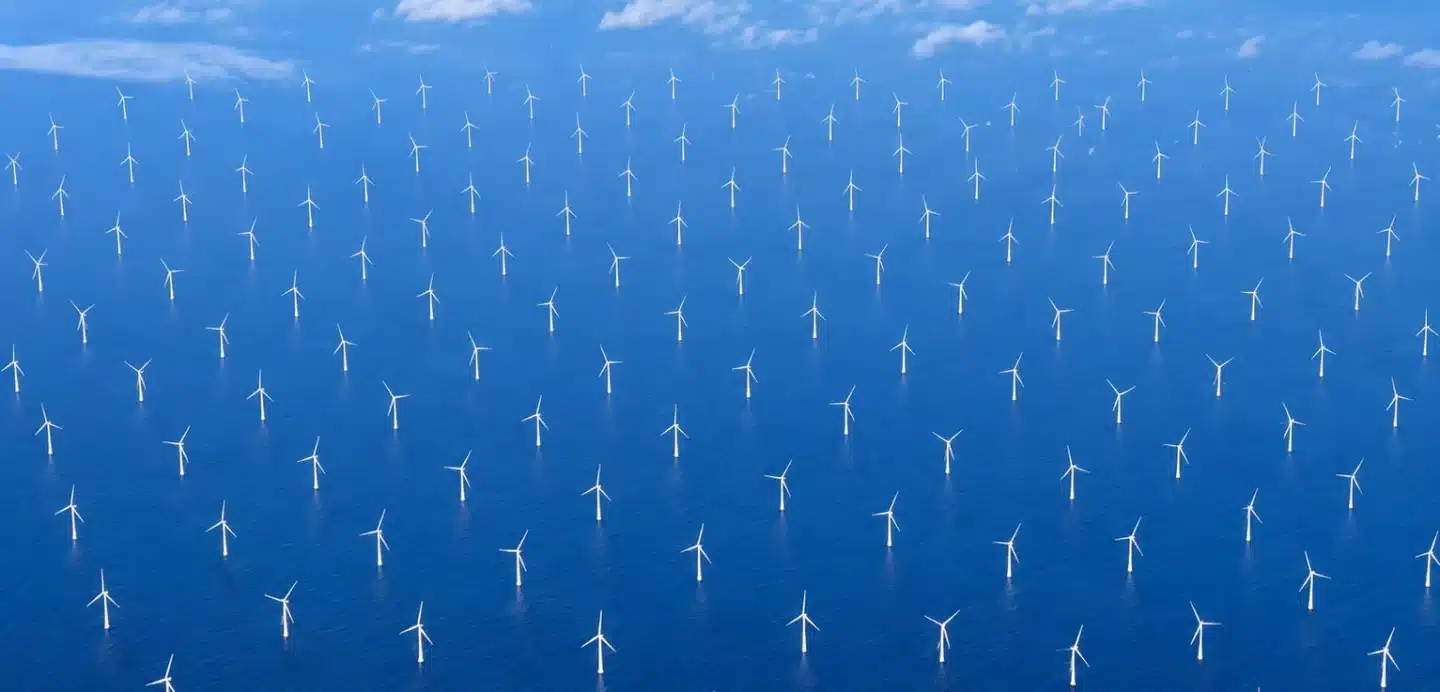
- Wind and solar are now the cheapest sources of electricity on Earth — but their value collapses during periods of excess generation.
- Industrial factories are unable to tap into this low-cost clean energy: they run 24/7 while renewable sources are intermittent. Electricity is cheapest in off-peak hours, typically about 5–8 hours per day.
- The primary obstacle to fully developing wind and solar energy is the insufficient capacity for energy storage in the power system.
- EU Industry and District Heating consume fossil fuels for approximately 75% of energy generation in thermal energy form.
- Approximately 30% of consumed thermal energy in the EU is low-temperature thermal energy — heating media temperature up to 95 °C. The most cost-effective heat medium for low-temperature thermal storage is clarified, demineralised water.
- Thermal Energy Storage tanks are a cost-effective and scalable method of converting intermittent electricity to always-available thermal energy, charging during off-peak hours at the lowest electricity cost.
The core challenge is how to store large amounts of low temperature thermal energy efficiently over extended periods.
The solution is an industrial Thermal Energy Storage Tank — a thermally insulated stainless steel tank designed to store excess heat in the form of hot water, effectively bridging the gap between heat generation and fluctuating heat demand.
An industrial Thermal Energy Storage Tank solves the decarbonization problem of mismatched timing between clean heat production and variable heat demand—enabling efficient electrification, eliminating fossil peaking, and maximizing the use of renewable and waste heat.
Industrial Thermal Energy Storage Tanks are the most efficient way to store low‑temperature thermal energy at scale, delivering the lowest life‑cycle cost over decades of operation.
With WTS prefabricated buffer tanks, heat pump based heating projects benefit from simplified and faster design, rapid installation, proven reliability, and long‑term performance in commercial and district heating networks.
Applications in Industrial & Commercial Heating Systems
Decarbonising industrial, commercial, and district heating remains one of the EU’s most critical engineering priorities under REPowerEU and EU ETS compliance frameworks.
Heat pumps, electrode and resistance electric boilers, solar thermal collectors, biomass combustion systems, and waste-heat recovery installations can all achieve fossil fuel displacement in low-temperature applications — but only when correctly paired with adequate thermal energy storage capacity. Without a properly sized buffer volume, system efficiency targets are unachievable, and the full economic case for electrification is compromised.
Western Technological Solutions manufactures factory-built, prefabricated stainless steel Atmospheric Thermal Energy Storage Tanks with working volumes from 50 m³ to 500 m³.
Every unit is pre-assembled, instrumented, and water-fill tested in our Klaipėda production facility in accordance with EN 14015 procedures before delivery.
Insulation is applied in-factory or on-site to accommodate project-specific requirements.
WTS serves EPC contractors, HVAC contractors, district heating operators, industrial heat consumers, solar thermal developers, and energy project developers across Scandinavia and the EU.
WTS Atmospheric Thermal Energy Storage Tanks are typically designed to EN 14015 — the correct EU standard for vertical cylindrical flat-bottomed above-ground welded steel tanks operating at atmospheric pressure.
EN 14015 is self-contained for shell design, bottom plate, roof, anchorage, wind stiffening, and water-fill testing for austenitic stainless steel grades.
Fabrication is generally executed under EN 1090-2 EXC3. Insulation performance is certified to EN 17956:2024 Class A — the highest thermal efficiency grade under current EU regulation.
Primary Applications – Thermal Energy Storage Tanks
Heat Pump Systems:
Large-scale commercial, industrial, and district heating heat pumps — air-source, ground-source, and sea-source — require buffer vessels to hydraulically decouple the compressor cycle from the distribution network. This decoupling reduces compressor start-stop frequency, extends equipment service life, and enables stable Tsupply/Treturn control under variable network load conditions.
Electric Boiler & Demand-Response TES:
Buffer tanks paired with electrode or resistance boilers enable operators to shift electrical consumption to off-peak tariff windows, delivering direct energy cost reductions and supporting grid balancing under REPowerEU and national demand-response programme requirements.
Biomass & Waste-Heat Boilers:
Biomass combustion systems generate heat at variable rates dependent on fuel moisture and combustion conditions. Buffer tanks decouple generation from instantaneous demand, prevent destructive short-cycling, and allow combustion at peak thermal efficiency regardless of real-time network load.
District Heating Substations & Peak Shaving:
Municipal and industrial district heating networks deploy Thermal Energy Storage Tanks at substation level for peak-load shaving, emergency heat reserve, and hydraulic zone decoupling — reducing peak boiler or heat pump plant capacity requirements and associated capital expenditure.
Solar Thermal Arrays:
Large-aperture solar thermal collector arrays produce heat intermittently and in proportion to solar irradiance. TES tanks store daytime thermal gain for evening and overnight load coverage in industrial process heat and district heating applications.
Industrial Process Heat (≤ 95 °C):
Food and beverage processing, pharmaceutical manufacturing, textile production, and chemical plants requiring stable process hot water at temperatures up to 95 °C benefit from buffer capacity to absorb demand transients without proportionally increasing heat source installed power.
Atmospheric Thermal Energy Storage Tanks represent the most technically reliable and lifecycle cost-effective solution for thermal storage in heating systems operating at temperatures up to +95 °C — particularly for heat pump-based systems where typical supply flow temperatures do not exceed +65 °C.
Stainless Steel Material Options and Comparison with Carbon Steel
WTS manufactures Thermal Energy Storage Tanks in a range of austenitic and duplex stainless steel grades.
The choice of material is defined by the chloride concentration and other parameters of the heating medium quality requirements for atmospheric hot water buffer tanks. This directly affects corrosion resistance, weldability, long-term maintenance costs, and overall service life.
Recommended grade for standard district Thermal Energy Storage Tanks up to +95 °C:
Lean duplex stainless steel EN 1.4162 (LDX 2101) — provides a good balance of corrosion resistance, weldability, mechanical strength, and cost for commercial and district heating applications.
- EN 1.4162 offers significantly higher resistance to chloride stress corrosion cracking (SCC) than austenitic grades such as 304L and is generally comparable to 316L in pitting resistance under moderate chloride conditions.
- For neutral or slightly alkaline district heating water at temperatures up to ~95 °C, EN 1.4162 is commonly considered suitable when chloride concentration is kept low (typically ≤ 100 ppm), assuming good water chemistry control and absence of crevice prone design details
- Like all lean duplex grades, its pitting and general corrosion rate increase with temperature and chloride level, so prolonged exposure to chloride rich water or poor oxygen control should be avoided.
Why stainless steel over carbon steel?
The case for specifying stainless steel rather than carbon steel for industrial Thermal Energy Storage Tanks is technical and economic, not merely commercial.
The following performance and lifecycle advantages are measurable and documented:
-
Zero internal corrosion failure risk:
Austenitic and duplex stainless steel grades maintain structural integrity in hot water service without internal protective coatings, eliminating the principal failure mechanism of carbon steel vessels in district heating applications.
-
Lowest total cost of ownership (TCO) over service life:
Carbon steel vessel internal coating systems have a documented service life of approximately 10 years, after which mandatory inspection, surface preparation, and relining operations are required. WTS stainless steel TES tanks require no internal coating — eliminating maintenance, inspection shutdown, and relining costs across a 40–50 year service life.
-
Long-term asset value retention:
Stainless steel atmospheric storage tanks retain structural and commercial value throughout their service life due to inherent corrosion resistance. Carbon steel vessels require continuous maintenance capital to retain operational status, with resale value diminishing as coating condition deteriorates.
-
Confirmed design service life in excess of 40 years:
Under standard district heating water chemistry and operating conditions, WTS stainless steel TES tanks are designed for a service life exceeding 40 years — compared to a typical 15–20 year coating replacement interval for comparable carbon steel vessels.
-
Reduced engineering and project execution time:
No coating specification, surface preparation scheduling, curing period, or internal inspection protocol is required during fabrication, installation, or periodic maintenance. This simplifies project engineering, reduces construction programme risk, and eliminates the QHSE management burden associated with solvent-based coating application.
-
Tolerant of variable heating medium chemistry:
Stainless steel grades are suitable for a broad range of water chemical compositions without imposing the strict pH control, deaeration, and oxygen scavenging requirements necessary to prevent corrosion in carbon steel heating systems.
-
Environmentally compliant throughout lifecycle:
The manufacture and field application of protective coating systems for carbon steel atmospheric storage tanks involves solvent-based compounds and process waste streams classified as hazardous under EU environmental regulations (REACH, Directive 2010/75/EU). WTS stainless steel tanks generate no hazardous waste during fabrication, operation, or end-of-life — and are fully recyclable with a recycled content of >60% in the base material.
-
Highest recycled content of any structural metal:
Stainless steel is fully recyclable at end of service life with zero material value loss, and carries a recycled input content typically exceeding 60%. This directly supports EU taxonomy-aligned sustainability reporting for district heating infrastructure investment.
WTS stainless steel Thermal Energy Storage Tanks are engineered for 40+ years of uninterrupted service with zero internal coating maintenance — delivering a measurable total cost of ownership advantage over the full project lifecycle.
Manufacturing Capabilities at WTS
Western Technological Solutions is a heavy industrial fabricator with dedicated stainless steel production infrastructure dedicated stainless steel production infrastructure at the Klaipeda Western Shipyard, part of the BLRT Grupp holding.
Our production capabilities are uniquely suited to large-volume Thermal Energy Storage Tanks fabrication:
CNC Rolling & Shell Fabrication
- CNC plate rolls capable of forming shells up to 6 m internal diameter from stainless plate
- Precision shell-to-shell alignment for multi-course tanks up to 34 m in height
EN 1090-2 EXC3 Qualified Welding
- All welding is carried out by certified welders under documented Welding Procedure Specifications (WPS) and Procedure Qualification Records (PQR) prepared and qualified in accordance with EN ISO 15614-1.
- Welder qualification is maintained per EN ISO 9606-1.
- Full weld traceability: each weld joint identified on as-built isometrics and documented in the Manufacture Dossier
Non-Destructive Testing (NDT)
- Radiographic testing (RT) and ultrasonic testing (UT) of principal weld seams in accordance with EN ISO 17636-1 / EN ISO 17640, as required by EN 14015 and the project-specific inspection and test plan (ITP).
- Liquid penetrant testing (PT) on all austenitic and duplex stainless steel weld seams per EN ISO 3452-1.
- Water-fill test (hydrostatic leak test) on all completed tanks in accordance with EN 14015 Section 12: tank filled to design maximum operating level with water, held for a minimum of 24 hours, inspected for leakage and deformation.
- NDT personnel qualified to EN ISO 9712 Level II minimum.
Quality, Testing, and Regulatory Compliance
At WTS, we prioritize safety and thermal efficiency. WTS Thermal Energy Storage Tanks are manufactured under a fully documented ISO 9001 Quality Management System, with every unit designed, fabricated, tested, and documented in accordance with the applicable European normative framework.
Every Thermal Energy Storage Tank we manufacture follows a strictly documented ISO-certified Quality Management System.
Standards and Certifications
WTS Thermal Energy Storage Tanks are engineered to meet the most rigorous applicable European standards for atmospheric storage tanks.
Each WTS Atmospheric Thermal Energy Storage Tank is designed, fabricated, tested, and documented in accordance with the following normative framework:
- EN 14015 — primary design and construction standard for vertical, cylindrical, flat-bottomed, above-ground welded steel tanks for storage of liquids at atmospheric and low pressure. Self-contained for shell design, bottom plate, roof, anchorage, wind stiffening rings, and water-fill testing for austenitic stainless steel grades.
- EN 1090-2 EXC3 — execution standard for welded steel structures; governs fabrication tolerances, welding, NDT, and surface treatment. WTS holds EN 1090 EXC3 certification.
- EN 17956:2024 Class A — thermal insulation performance standard for hot water storage systems; Class A is the highest efficiency grade. All WTS TES tanks are certified to Class A as standard.
- CE marking is issued under EN 1090-1 per Construction Products Regulation CPR 305/2011, with a Declaration of Performance (DoP) supplied with each unit. PED 2014/68/EU is not applicable to atmospheric tanks.
- ISO 9001 — Quality Management System covering all design, procurement, fabrication, inspection, and documentation processes.
- EN ISO 3834-2 — Quality requirements for fusion welding of metallic materials; comprehensive requirements level.
By combining EN 14015 engineering rigour with EN 1090-2 EXC3 fabrication discipline and EN 17956:2024 Class A insulation performance, WTS provides reliable, future-proof thermal energy storage infrastructure for the EU’s most demanding district heating and industrial decarbonisation projects.
Delivery, Lifting, and Transport Options for Tanks and Equipment
WTS offers advanced logistics solutions for heavy and oversized industrial equipment across Europe. Our fabrication workshop, located just 70 meters from a deep-water sea pier in Klaipeda Port, Lithuania, provides a strategic advantage for cost-effective and efficient transport of large-scale assemblies.
Thanks to this unique location, we enable direct loading of fully assembled tanks and process equipment onto vessels—eliminating road transport limitations and reducing overall logistics costs.
Sea Transport (Recommended for 100–500 m³ Thermal Energy Storage Tanks)
Sea freight is the most efficient solution for transporting large-volume tanks and heavy industrial equipment across Europe.
- Direct factory-to-vessel loading via on-site pier access
- No road transport restrictions for oversized cargo
- Delivery to major European ports, including Hamburg, Antwerp, Rotterdam, Helsinki, Turku, Gothenburg, Copenhagen, Aarhus, Esbjerg, Aalborg, Oslo, Bergen, Stavanger, Trondheim, Kristiansand, and others
- Strong coverage across Scandinavia, including Denmark and Norway’s industrial hubs
- Capability to handle single-lift loads exceeding 500 tonnes
- Ideal for fully assembled storage tanks, pressure vessels, and process modules
Road Transport (50–150 m³ TES Tanks and Modular Equipment)
For smaller tanks and pre-assembled modules, we provide flexible and compliant road transport solutions across the EU.
- Standard and abnormal load transport to any European destination
- Transport of units up to approximately 4.2 meters outer diameter under EU permits
- Optimized routing and permit handling for oversized cargo
- Suitable for modular systems and partially assembled equipment
Lifting and Heavy Handling Capabilities
WTS ensures safe and efficient lifting operations for heavy industrial equipment.
- High-capacity cranes available for heavy lifts directly at the fabrication site
- Seamless transition from production to transport
- Reduced handling risks and minimized project timelines
Commissioning and Start-Up Support
Our service does not end with delivery.
WTS provides full technical support during installation and commissioning:
- On-site supervision by experienced engineers
- Support during installation and first-fill operations
Frequently Asked Questions — Thermal Energy Storage Tanks
Q1: What is an atmospheric Thermal Energy Storage Tank?
An atmospheric Thermal Energy Storage (TES) tank is a non‑pressurised hot water storage vessel designed to operate at near‑ambient pressure. It provides both hydraulic and thermal decoupling between heat generation units (e.g., heat pumps, boilers, electric heaters) and variable system demand.
The TES tank enables:
- load balancing and peak shaving
- reduced start‑stop cycling of generation equipment
- improved system efficiency and operational stability
Thermal energy is stored as sensible heat, with storage capacity defined by water volume and operating temperature differential (ΔT).
Designed for modern district heating and commercial applications, TES tanks maximise energy performance while supporting long‑term operational value.
Q2: What volume of Thermal Energy Storage Tank do I need?
Correct sizing of a Thermal Energy Storage Tank is the single most technically critical step in the design of any heat pump, electric boiler, or district heating installation. Undersizing the buffer volume increases heat source cycling frequency, reduces coefficient of performance (COP), and compromises system efficiency. Oversizing increases capital expenditure, footprint requirements, and thermal standing losses.
The required storage volume is governed by the system temperature regime (Tsupply/Treturn), heat source rated output, peak network load, desired charge and discharge duration, and the thermal stratification efficiency achievable in the selected tank geometry.
The usable thermal energy content of a stratified Thermal Energy Storage Tank is calculated as follows:
Qusable = ρ · Vnet · c · ΔT · ηs
| Symbol | Parameter | Typical Value / Unit |
|---|---|---|
| Qusable | Usable stored thermal energy | kWh |
| ρ (rho) | Density of heating medium (water) | ≈ 0.972 kg/L at 75 °C |
| Vnet | Net working volume of the tank | m³ |
| c | Specific heat capacity of water | ≈ 1.163 Wh/(kg·K) [= 4.186 kJ/(kg·K)] |
| ΔT | Operating temperature differential (Tsupply − Treturn) | °C — defined by system design |
| ηs | Stratification efficiency factor | 0.85–0.95 for well-designed stratified tanks; ≤ 0.70 for poorly designed or mixed vessels |
Key Engineering Principles for TES tanks
A smaller temperature differential ΔT requires a proportionally larger tank volume to store the same quantity of thermal energy.
A larger ΔT allows the same stored energy to be achieved in a smaller vessel, reducing capital cost and installation footprint.
The required Thermal Energy Storage Tank volume is therefore directly dependent on the design Tsupply/Treturn regime of the heating system.
WTS applications engineers will size the Thermal Energy Storage Tank based on your confirmed system parameters: Tsupply, Treturn, heat source rated output, network flow rates, peak demand load profile, desired charge and discharge duration, design operating pressure, and nozzle connection schedule.
To submit your project data, please download and complete the technical questionnaire provided below.
Q3: What is Stratification in a Thermal Energy Storage Tank?
Thermal stratification is the process of layering water within a tank based on its temperature. Because hot water is less dense than cold water, it naturally rises to the top, while cooler water settles at the bottom.
In a stratified Thermal Energy Storage Tank, this natural phenomenon is managed through precision engineering. Instead of the water mixing into a uniform lukewarm temperature, the tank maintains distinct “layers” of heat. This ensures that your heating system can draw high-temperature water from the top instantly, even if the entire volume of the tank isn’t fully heated yet.
Benefits of Advanced Stratification Technology
Our tanks are precision-engineered to act as a high-performance thermal interface, delivering four primary technical advantages:
- Strict Temperature Regime Control (Tsupply/Treturn): This is the most vital feature. Our stratification technology ensures the permanent maintenance of required system temperatures. By preventing “thermal short-circuiting,” our tanks facilitate a stable hot supply at peak temperature, preventing the return flow from compromising the stored energy.
- Instant Peak Efficiency: Because the water is layered rather than mixed, your system can draw high-temperature water from the top of the tank immediately, even if the entire tank hasn’t reached full temperature yet.
- Optimized Heat Source Performance: Whether using heat pumps or boilers, stratification ensures that the heat source operates at its most efficient condensation point or COP by receiving the coldest possible return water.
- Minimal Energy Degradation: In combination with our EN 17956:2024 Class A insulation, these thermal layers are preserved with surgical precision, minimizing standby heat loss.
By maintaining the precise Tsupply/Treturn delta, WTS stratified tanks serve as a high-efficiency “thermal battery” that eliminates energy waste and stabilizes even the most complex industrial heating circuits.
Q4: What is EN 17956:2024 Class A insulation?
EN 17956:2024 is the current European standard defining the thermal performance and energy efficiency of hot water storage and Thermal Energy Storage Tank systems.
Class A represents the highest efficiency level under this standard, limiting standby heat losses to the lowest permissible threshold.
WTS Thermal Energy Storage Tanks are designed, manufactured, and tested in accordance with EN 17956:2024 Class A, ensuring:
- Full compliance with EU energy efficiency regulations
- Minimum standby heat losses
- Maximum thermal energy retention, even in large scale and grid level storage applications
How Is Insulation Thickness Determined?
The key design parameter for calculating insulation thickness is the:
Design Minimum Ambient Temperature (Tabm.min, °C)
This value represents the lowest ambient temperature in which the buffer tank is expected to operate and directly impacts the required insulation performance.
Customization Options
You may:
- Specify a required Design Minimum Ambient Temperature (Tabm.min)
- or Simply indicate the tank installation location, and WTS will determine the appropriate design temperature automatically
This approach ensures optimal insulation thickness, Class A energy efficiency, and reliable performance under real operating conditions.
Q5: Where Can WTS Deliver Tanks?
WTS delivers Thermal Energy Storage Tanks and large scale thermal energy storage systems worldwide.
The WTS production workshop is located just 70 m from a deep water sea pier in the Port of Klaipėda (Lithuania), enabling efficient handling, lifting, and shipment of oversized and heavy tanks.
Sea Transport
Fully assembled tanks up to 500 m³ capacity and 500+ tonnes can be transported by sea to any European port, making sea freight the most cost effective solution for large and heavy units.
Road Transport
Road delivery is available for tanks within standard abnormal load limits, subject to route feasibility, permits, and local transport regulations.
Oversized Assemblies
For large-scale tanks exceeding road transport limitations, direct sea shipment from the Klaipėda pier ensures safe, efficient, and economical delivery without intermediate handling.
This integrated logistics capability allows WTS to support district heating networks, industrial thermal energy storage, and grid-scale heating projects across Europe and beyond.
Q6: Why can WTS TES tanks be considered sustainable and eco‑friendly?
WTS Thermal Energy Storage Tanks provide a highly sustainable solution due to their material properties, durability, and low lifecycle impact:
- Stainless steel construction – inherently sustainable
Manufactured from corrosion-resistant stainless steel, eliminating the need for protective coatings
No risk of coating degradation, contamination, or material loss over time.
Ensures long-term environmental stability and clean operation - Exceptional service life
Designed for multi-decade operation (40+ years) with no structural degradation under normal conditions
High resistance to corrosion, thermal cycling, and water chemistry variations
Reduces material consumption and replacement frequency - Maintenance-free operation
No internal or external corrosion protection systems required
No need for periodic recoating, relining, or anti-corrosion treatment
Minimises maintenance interventions, costs, and environmental impact - No painting or chemical treatments
Unlike carbon steel tanks, stainless steel tanks require no painting, use no solvents, coatings, or VOC-emitting processes.
Eliminates environmental hazards during both production and operation - Fully recyclable material
- Stainless steel is fully recyclable without quality loss, with recycled input content typically exceeding 60%.
- High scrap value ensures responsible end-of-life handling.
- Supports circular economy principles and EU taxonomy-aligned sustainability reporting.
- Reduced lifecycle footprint
Long lifetime + no maintenance + no recoating = significantly Lower total lifecycle emissions and resource use.
Q7: What lead time should I expect for a 50–500 m³ TES tank?
Typical production lead time is 5–15 weeks from order confirmation, depending on volume, insulation specification, and accessory scope.
Early-stage engineering alignment (P&ID review, nozzle schedule approval) is recommended 2–4 weeks before formal order placement.
Request a Quote for Thermal Energy Storage Tank
Get a custom‑engineered Thermal Energy Storage Tank solution tailored to your energy system requirements and project specifications.
To select the optimal Thermal Energy Storage Tank volume and model, please refer to our table showing usable thermal energy stored in Thermal Energy Storage Tanks.
Accurately size your thermal storage by considering heat pump or boiler capacity, operating temperature range (ΔT), and required charge/discharge durations—ensuring optimal performance in district heating and commercial applications.
Please download and complete the questionnaire for your Thermal Energy Storage Tank and then email it to us.
Our sales team will review your request and provide a budget proposal within three business days.

Invest in stainless steel thermal energy storage tanks engineered for 40+ years of uninterrupted service—combining
uncompromising safety, proven reliability, zero coating maintenance, and full EU certification
to deliver long‑term sustainable value!
Why choose WTS thermal energy storage tanks?

High‑Efficiency
Thermal Energy Storage
Tanks
Superior Heat Performance
Through Precision
Thermal Stratification

40+ years
Design lifetime
Our Stainless Steel
Thermal Energy Tanks
Engineered for
Longest Service Life

Large‑Scale
prefabricated
Thermal Energy
Storage Tanks
up to Ø 6 m
and up to 500 m³

EN‑compliant
prefabricated TES tanks
Manufactured in the EU
to EN 14015, EN 17956
and ISO 9001 standards

Up to 3 Months Faster
Project Delivery
Prefabricated
Thermal Energy Storage
tanks accelerate
design and installation.

Safest & Most Sustainable
Asset for the Entire
Project Lifetime
Zero corrosion.
Minimal maintenance.
Long-term value.